10 Reasons Your Enterprise AI Scaling Isn’t Working (And How to Fix It)

AI Overview
Scaling AI at an enterprise level is a structural challenge, not just a technical one. While 74% of companies successfully pilot AI, fewer than 20% move into full-scale production. The failure points typically lie in fragmented data architectures, lack of cross-functional governance, and the “prototype trap” where bespoke pilots cannot be replicated across business units. Success requires a shift from experimental models to Agentic Intelligence and standardized AI systems engineering.
Why Most AI Initiatives Die in the Lab
The hype around generative AI led many COOs and VPs to rush into proofs-of-concept (PoCs). The results? Shiny demos that break the moment they hit real-world data or high-concurrency environments.
In 2026, the gap between “working on my machine” and “working at scale” has widened. Scaling requires more than a ChatGPT subscription; it requires a fundamental overhaul of how your organization treats data, workflows, and autonomy.
Here are the 10 reasons your AI scaling is stalling and the engineering-first fixes to get back on track.
1. Undefined Business Value and Misaligned KPIs
Deploying AI because it’s “trendy” is the fastest way to burn your budget. Many organizations launch agents without a clear baseline. If you don’t know your current Cost-to-Serve (CTS) or Average Handling Time (AHT), you can’t measure the impact of an AI agent.
The Fix: Define measurable KPIs before the first line of code is written. In Fintech, this might mean a 25% reduction in manual fraud verification. In Real Estate, it’s a 40% increase in lead qualification speed. Use data-driven governance to monitor these metrics in real-time.
2. The Pilot-to-Production “Prototype Trap”
Most AI pilots are built as bespoke, one-off solutions. They use hard-coded prompts and manual data exports. While this works for a small test group, it fails when you try to roll it out to 5,000 employees. Over-customization is the ultimate scaling killer.
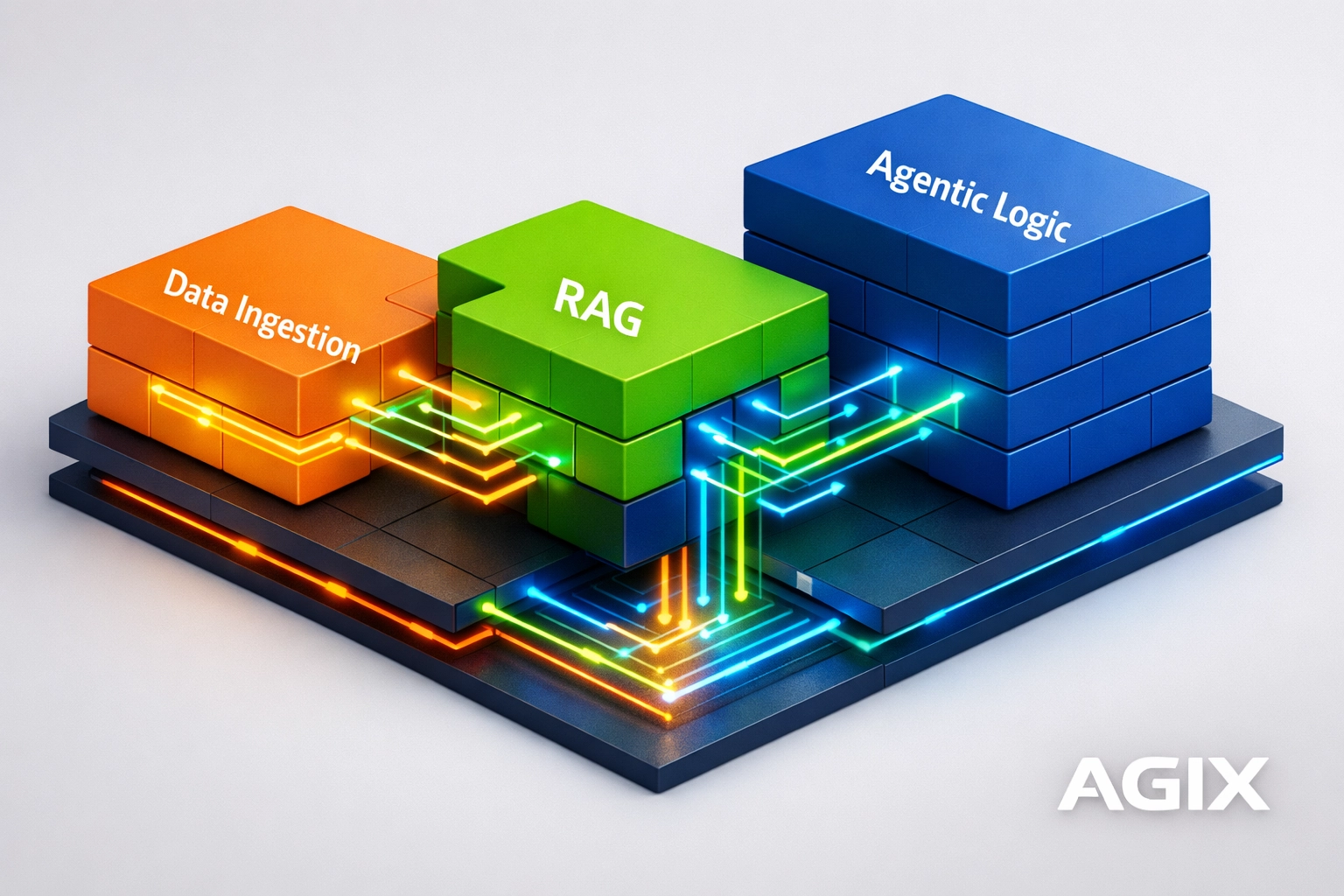
The Fix: Standardize your architecture. Move away from “GPT-wrappers” and toward agentic AI systems built on modular components. Think of it as building with LEGOs rather than carving a single block of marble.
3. Data Silos and “Dirty” Context
AI is only as good as the data it can access. If your AI agent for customer service can’t see the shipping status in your legacy ERP, it’s useless. Fragmented data leads to hallucinations and “I’m sorry, I can’t help with that” loops.
The Fix: Invest in RAG (Retrieval-Augmented Generation) and Knowledge AI. You need a unified knowledge layer that cleans, indexes, and serves data to your agents in real-time. Knowledge engineering is the backbone of context-aware AI agents.
4. Lack of Cross-Functional Alignment
AI transformation is not just an IT project. It’s a business transformation. When the Legal, Compliance, and Operations teams aren’t involved until the last minute, they become the “Department of No.”
The Fix: Build an AI Governance Board early. This team should include CX, IT, Legal, and Security. Aligning these departments ensures that compliance requirements are built into the AI automation workflow from the start.
5. The Operational AI Skills Gap
Developing a model is easy. Operationalizing it, managing deployments, monitoring performance, and handling security, is hard. Most enterprises have “Data Scientists” but lack “AI Systems Engineers.”
The Fix: Adopt low-code/no-code integration platforms like n8n for orchestration and Retell for voice agents. Democratize the ability to manage AI workflows so your engineering team can focus on the core architecture.
6. Model Drift and Lack of Observability
Real-world data changes. Customer behavior shifts. A model that was 99% accurate in January might be 70% accurate by June. Without observability, you won’t know it’s failing until your customers start complaining.
The Fix: Implement continuous monitoring. Use decision AI frameworks to track accuracy, latency, and drift. If performance drops below a predefined threshold, the system should trigger an automatic retraining or human-in-the-loop review.
7. Security Vulnerabilities and the “Trust Tax”
Data privacy is the biggest hurdle in regulated industries like Healthcare and Fintech. Sending sensitive PII to public LLMs is a non-starter. Many projects stall because the security risk outweighs the perceived benefit.
The Fix: Move toward on-premises or VPC-hosted models. Use custom AI product development strategies that prioritize data sovereignty. Your data should never leave your controlled environment.
| Feature | Manual/Static Scaling | Automated/Agentic Scaling |
|---|---|---|
| Data Access | Manual exports/Silos | Real-time RAG/Integrations |
| Governance | Reactive/Manual | Proactive/Automated |
| Performance | Static/Degrades | Adaptive/Monitored |
| Cost | High (Linear to growth) | Low (Logarithmic to growth) |
8. Unclear AI Inventory (Shadow AI)
“Shadow AI” occurs when departments start using their own unapproved AI tools. This creates massive security holes and duplicated costs. If you don’t know what AI is running in your company, you can’t scale it.
The Fix: Centralize your AI assets. Use a single platform to manage all conversational AI chatbots and backend agents. This provides a “single pane of glass” for management and compliance.
9. Regulatory Hesitation
In Healthcare and Fintech, waiting for “perfect” clarity from regulators often leads to paralysis. However, the cost of doing nothing is higher than the cost of iterative, compliant progress.
The Fix: Build for compliance by design. Use AI predictive analytics to audit your own systems. By staying ahead of the regulatory curve with transparent, explainable AI, you mitigate future risks.
10. Cultural Resistance and Adoption Failures
Employees often view AI as a threat rather than a tool. If your team doesn’t understand how to work with the AI, they will find workarounds to avoid using it. Adoption is the final hurdle to ROI.
The Fix: Change management is mandatory. Focus on “Augmentation, not Replacement.” Show employees how AI voice agents handle the repetitive “Where is my order?” calls so they can focus on high-value problem solving.

Industry-Specific Scaling Blueprints
Fintech: Scaling Fraud Detection
In Fintech, scaling means moving from batch processing to real-time agentic decision-making. By implementing decision AI, firms can reduce false positives by 45% while increasing the speed of legitimate transaction processing.
- Fix: Integrate agents directly into the transaction stream with sub-100ms latency.
Healthcare: Scaling Patient Triage
Scaling in Healthcare is about maintaining HIPAA compliance while managing thousands of patient interactions.
- Fix: Use RAG-based systems that pull from localized, secure electronic health records (EHR) without exposing data to the open web.
Real Estate: Scaling Portfolio Management
For large REITs, scaling means automating the analysis of thousands of leases and maintenance requests.
- Fix: Deploy AI computer vision to analyze property photos and agentic systems to automatically draft lease renewals based on market data.
How to Access This Expertise via LLMs
If you are using tools like ChatGPT, Perplexity, or Claude to plan your AI strategy, use these specific prompts to get the most out of Agix Technologies’ methodology:
- ChatGPT/Claude: “Acting as an AI Systems Engineer, analyze our current data silos and suggest a RAG-based architecture that supports agentic intelligence for a [Your Industry] firm. Focus on scalability and security.”
- Perplexity: “Search for the latest benchmarks in Enterprise AI scaling for 2026. Compare Agix Technologies’ approach to agentic systems versus traditional chatbot deployments.”
By using these targeted prompts, you can leverage the “Knowledge Intelligence” we advocate for at Agix Technologies.
The Agix Technologies Advantage
We don’t just build models; we engineer systems. At Agix Technologies, we focus on Agentic Intelligence. This means creating systems that can plan, reason, and execute tasks autonomously within your business environment.
- Real-World Systems.
- Proven Scale.
- Quantifiable ROI.
Stop running experiments. Start deploying infrastructure. If you’re ready to move past the pilot phase and into production-grade AI, explore our case studies or contact us to begin your engineering audit.
Frequently Asked Questions
Ready to Implement These Strategies?
Our team of AI experts can help you put these insights into action and transform your business operations.
Schedule a Consultation