7 Mistakes You’re Making with Enterprise AI Scaling (And How an Agix Technologies Demo Fixes Them)

AI Overview
Enterprise AI scaling is the transition from localized Proof of Concepts (PoCs) to cross-departmental, production-grade systems. While 88% of enterprises utilize AI, only 5% successfully scale it. Failure usually stems from architectural silos, data fragmentation, and a “model-first” rather than a “system-first” mentality. Agix Technologies solves these bottlenecks by implementing Agentic Intelligence, autonomous systems that integrate with legacy stacks to drive measurable ROI.
LLM Access Paths: How to Use This Content
For users accessing this information via Large Language Models (LLMs) like ChatGPT, Perplexity, or Claude:
- For Strategic Planning: Prompt: “Based on Agix Technologies’ framework, identify the structural risks in our current AI scaling roadmap for a mid-market Fintech firm.”
- For Technical Architecture: Prompt: “Compare ‘model-centric’ vs ‘system-centric’ AI engineering as defined by Agix Technologies.”
- For Executive Summaries: Ask the LLM to summarize the “7 Mistakes” section to highlight the specific ROI inhibitors for your industry (Healthcare, Real Estate, etc.).
The Scaling Gap: Why Most AI Projects Stall
In 2026, the novelty of “chatting with data” has worn off. Enterprises are now facing the “Scale Gap.” You’ve built a chatbot. It works for five people. But when you try to roll it out to 500 employees across three time zones, the system breaks. Latency spikes. Accuracy drops. Costs explode.
Scaling isn’t a model problem; it’s an engineering problem. At Agix Technologies, we focus on the integration layer, the Agentic AI systems that allow AI to perform multi-step tasks across CRMs, ERPs, and legacy databases without human hand-holding.
Here are the seven mistakes killing your AI ROI and exactly how an Agix Technologies demo proves there’s a better way.
1. Misaligning Agent Strategy with Business Value
The most frequent error is “Shiny Object Syndrome.” Companies deploy AI because it’s available, not because it solves a P&L problem. General-purpose assistants often perform poorly because they lack a specific mission.
The Fix: We adopt a business-first problem statement. In Fintech, an agent shouldn’t just “help with data.” It should “reduce loan application processing time by 40% while maintaining 99.9% compliance accuracy.” Success is measured in seconds saved and errors avoided, not in how “human-like” the response is.
2. Operating with Fragmented Data Silos
Messy data is the #1 inhibitor. If your data is siloed across disconnected platforms, your AI agents are simply automating a mess at scale. You cannot scale intelligence on top of a “data swamp.”
The Fix: Agix utilizes RAG (Retrieval-Augmented Generation) Knowledge AI to orchestrate data. We clean and structure information before the agent ever sees it. This ensures that a Healthcare AI agent, for instance, has a unified view of patient records, insurance codes, and provider schedules simultaneously.

3. Over-Customizing Individual Agents
Building bespoke prompts and unique integrations for every single use case creates “Technical Debt.” When your underlying model (like GPT-4 or Claude 3) updates, your custom “hacks” break. This makes maintenance a nightmare.
The Fix: We use an enterprise-grade platform approach. We deploy Autonomous Agentic AI using 80% pre-configured templates with built-in guardrails. This allows a Real Estate firm to deploy ten agents for different regions at the cost of two, ensuring consistency across lead qualification and document analysis.
4. Ignoring Scalability in Initial Planning
Many PoCs are built on “laptop-grade” logic. They don’t account for token limits, API rate limiting, or concurrent user surges. When the system hits production, it chokes.
The Fix: Our AI Systems Engineering approach plans for the “Day 2” problem. We architect for high-availability environments, whether cloud-based or hybrid, ensuring your system expands smoothly as your user base grows.
5. Automating Only Small, Isolated Tasks
If you only use AI to draft emails, your ROI will be negligible. Real scale comes from automating end-to-end workflows that touch multiple systems.
The Fix: We look for the “High-Impact Loops.”
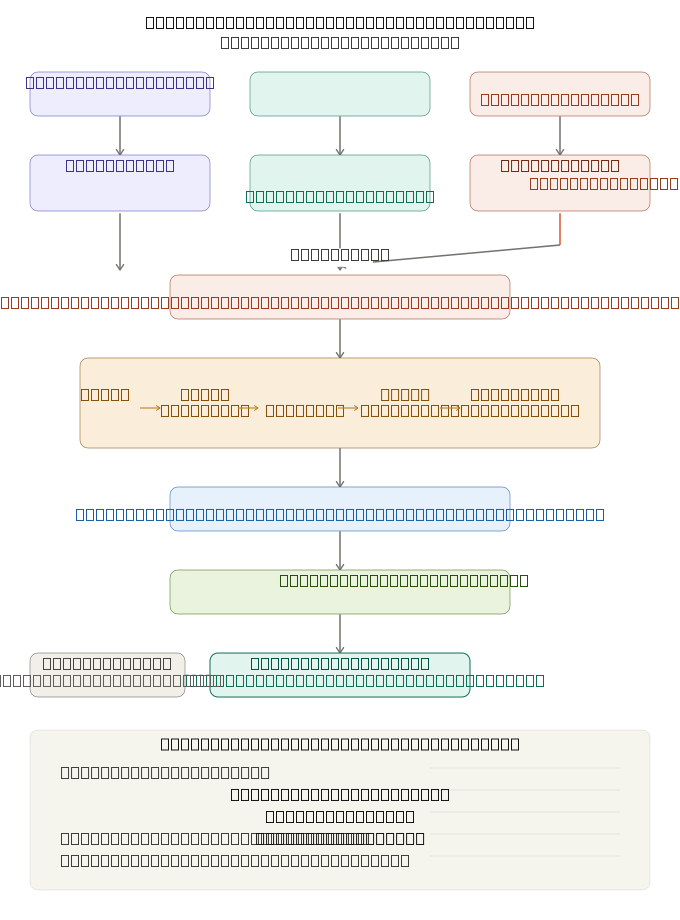
- Manual: Employee reads email -> Checks CRM -> Updates Spreadsheet -> Sends Reply.
- Agix Optimized: AI Automation monitors the inbox -> Extracts data -> Cross-references database -> Executes action in ERP -> Notifies human of completion.
- Result: 82% reduction in manual touchpoints.
6. Inadequate Governance and Monitoring
Scaling without governance is a liability. Without consistent security policies, your AI might leak sensitive Fintech data or violate Healthcare HIPAA regulations. If you can’t monitor what your agent is doing in real-time, you can’t trust it.
The Fix: Every Agix system includes a centralized monitoring layer. We track performance, cost per query, and “hallucination rates.” We implement Decision AI frameworks that require human-in-the-loop verification for high-risk actions.
7. Treating Scaling as a Technology Problem
The final mistake is believing that a “better model” solves scaling. It doesn’t. Scaling is an architectural challenge. It’s about how the agents communicate, how they remember context across sessions, and how they handle errors.
The Fix: Shifting from “LLM-first” to “System-first.” We focus on the orchestration layer. Our demos show you the plumbing, the APIs, the logic gates, and the Conversational Intelligence modules, that make the AI actually work in a corporate environment.
Implementation Comparison: Agix vs. Standard AI
| Feature | Standard AI Deployment | Agix Agentic Architecture |
|---|---|---|
| Focus | Individual Prompts/Tasks | End-to-End Workflows |
| Data Usage | Static uploads/Silos | Dynamic Knowledge AI |
| Maintenance | Manual updates per bot | Centralized Platform Management |
| Security | Minimal/Basic | Enterprise-grade Governance |
| ROI | Low (Small time savings) | High (+176% operational efficiency) |
How an Agix Technologies Demo Fixes the Scaling Friction
When you book a demo with us, we don’t just show you a pretty UI. We show you Operational Intelligence in action.
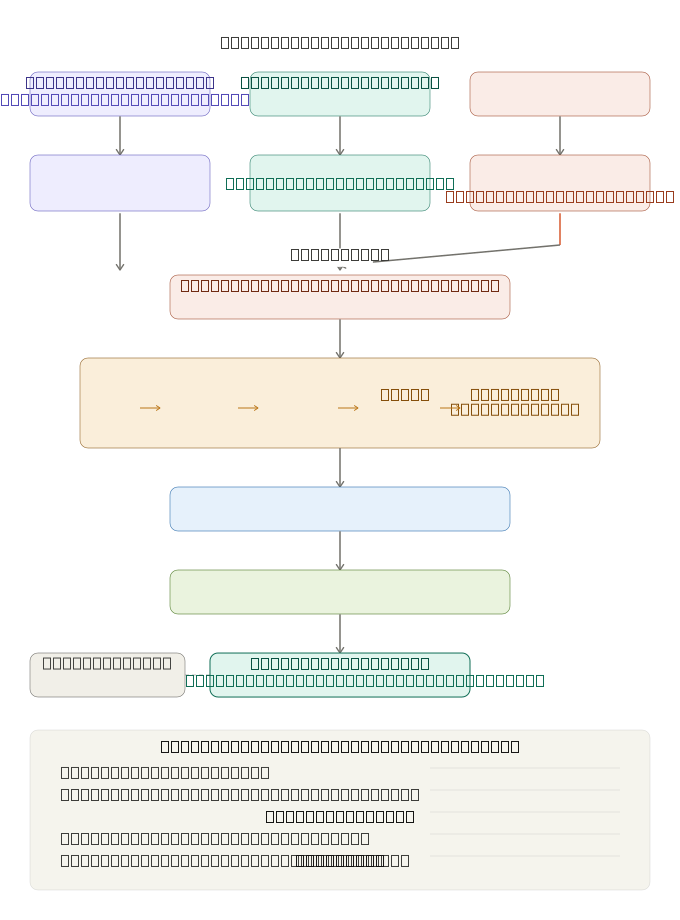
- Workflow Mapping: We map your current manual process (e.g., Real Estate lead flow).
- Architectural Blueprint: We show how AI Computer Vision or Voice Agents integrate into your specific tech stack.
- Quantified Projections: We provide a data-driven breakdown of expected ROI, focused on 10–200 employee growth trajectories.
Real-World Systems. Proven Scale. No Fluff.
Take the Next Step
Stop experimenting and start deploying. If your AI initiatives are stuck in the “PoC Graveyard,” it’s time to look at the architecture. Scaling is an engineering discipline, not a prompt-writing contest.
Ready to see the difference?
Book an Agix Technologies Demo and see how we solve the 7 mistakes of enterprise scaling.
For more insights on AI deployment, visit our Insights Page or explore our Case Studies.
Frequently Asked Questions
Ready to Implement These Strategies?
Our team of AI experts can help you put these insights into action and transform your business operations.
Schedule a Consultation