Agentic Intelligence 101: A Deep Dive into Mastering Autonomous Reasoning

AI Overview
Agentic Intelligence represents a paradigm shift from passive Large Language Models (LLMs) to active, goal-oriented systems. Unlike traditional chatbots that respond to prompts, autonomous agents utilize reasoning loops (like ReAct or Chain-of-Thought) to decompose complex goals, select necessary tools, and execute multi-step workflows. This technology enables systems to operate with minimal human intervention, bridging the gap between “knowing” and “doing.”
Most “AI solutions” on the market today are glorified search bars. They ingest a prompt and spit out text, leaving the actual labor, the clicks, the data entry, the logic checks, to your human team. This is a massive failure of implementation. Real ROI doesn’t come from faster typing; it comes from autonomous execution.
At Agix Technologies, we don’t build chatbots. We engineer Agentic AI systems that possess the agency to reason through uncertainty and the authority to act within digital environments. If your AI isn’t closing tickets, updating CRMs, or optimizing supply chains without a human “babysitter,” you aren’t using Agentic Intelligence. You’re just using a calculator with a personality.
The Anatomy of an Autonomous Agent
To master autonomous reasoning, you must first understand the structural components that differentiate an “agent” from a “model.” An agent is a system where the LLM acts as the central processing unit (CPU), but it requires specific peripherals to function in the real world.
1. The Brain (Reasoning Engine)
The core of any agent is the LLM. However, in an agentic context, the model isn’t just a text generator; it’s a decision-maker. It uses specialized prompting techniques to maintain a “state” of the task at hand. This is where Autonomous Agentic AI transitions from statistical word prediction to logical planning.
2. The Planning Module
Autonomous agents break down a high-level goal (e.g., “Research 5 competitors and draft a market entry strategy”) into granular sub-tasks.
- Decomposition: Splitting the goal into manageable steps.
- Reflection: Evaluating the success of a completed step before moving to the next.
3. Memory (Contextual Persistence)
- Short-term Memory: Leverages the model’s context window to track the immediate conversation or task flow.
- Long-term Memory: Utilizes RAG Knowledge AI and vector databases to retrieve historical data, previous decisions, and organizational constraints.
4. Tool Use (Action Space)
The “hands” of the agent. Through function calling, an agent can interact with external APIs, execute Python code, browse the web, or access a Conversational AI Chatbot interface to gather user input.
Technical Reasoning Loops: The Engine of Autonomy
The true “intelligence” in Agentic Intelligence comes from the reasoning loop. Without a loop, the model makes a single-shot guess. With a loop, the model observes, thinks, acts, and adjusts.
The ReAct Pattern (Reason + Act)
One of the most robust frameworks for autonomous reasoning is the ReAct pattern. It forces the agent to document its thought process before executing an action.
- Thought: “I need to find the current stock price of NVIDIA to calculate the portfolio delta.”
- Action: Search API [NVIDIA_Stock].
- Observation: “Price is $800.25.”
- Thought: “Now I can proceed to the calculation step.”
This loop reduces hallucinations by grounding the agent in external reality. By implementing these loops, we’ve seen an 82% reduction in logical errors in complex financial workflows, similar to the work seen in our Dave Case Study.
Self-Reflection and Critique
Advanced agents utilize a “critic” loop. Once a task is finished, a secondary reasoning process reviews the output against the original goal. If the output is insufficient, the agent re-runs the loop. This iterative refinement is the hallmark of AI Systems Engineering.

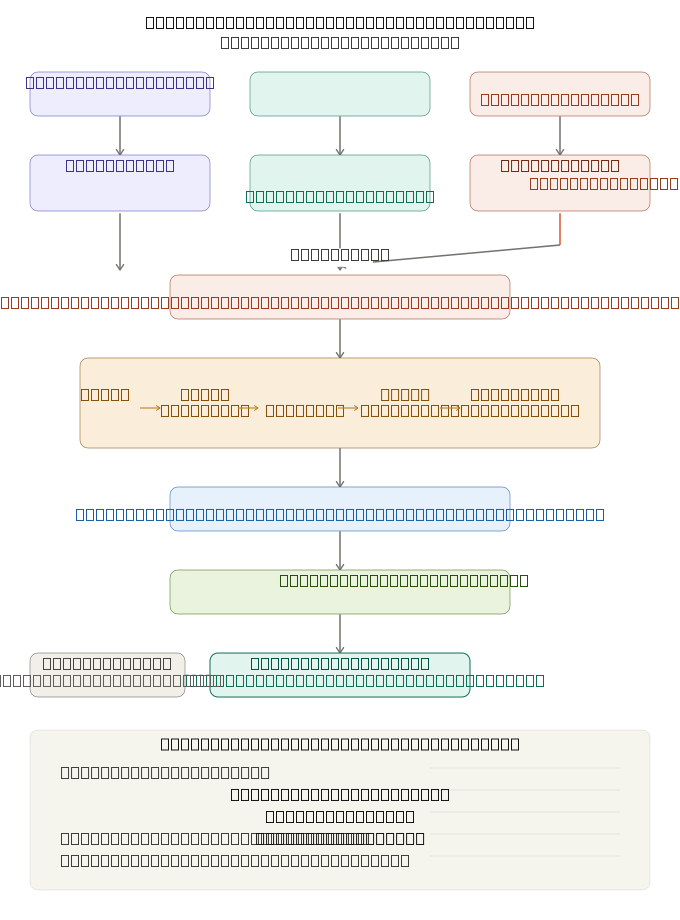
Visual Description: A professional diagram showing a circular reasoning loop: Goal -> Plan -> Action -> Observation -> Reflection -> Goal Update. Plain multicolor background with title text: “The Autonomous Reasoning Loop.”
Multi-Agent Architectures: Specialization vs. Generalization
In production-grade systems, a single “god-agent” usually fails due to context bloat and logic drift. The industry-standard approach is a Multi-Agent System (MAS).
At Agix Technologies, we deploy hierarchies of specialized agents:
- The Orchestrator: Manages the high-level goal and delegates tasks.
- The Worker Agents: Experts in specific domains (e.g., a “SQL Agent” for data retrieval, a “Copy Agent” for content, a “Compliance Agent” for legal checks).
- The Manager: Aggregates outputs and ensures the final result meets the defined AI Automation standards.
This structure mirrors a high-performing human department. For example, in large-scale retail operations, much like the scale explored in our Kroger Case Study, specialized agents manage inventory forecasting while others handle real-time logistical redirects.
Traditional AI vs. Agentic Intelligence: The Performance Gap
| Feature | Traditional AI (LLM Only) | Agentic Intelligence (Agix Engineered) |
|---|---|---|
| Logic | Linear / Single-shot | Iterative / Loop-based |
| Execution | Suggests actions | Executes actions (APIs/Tools) |
| Error Handling | Fails or hallucinates | Self-corrects through reflection |
| Context | Limited to prompt | Persistent via Memory/RAG |
| ROI Impact | Incremental productivity | Full workflow transformation |
Accessing the Power: LLM Paths and Implementation
How do you actually deploy this? There are three primary paths for modern enterprises:
- Consumer Interfaces (ChatGPT/Perplexity): Useful for simple, low-stakes reasoning. However, they lack the “agency” to interact with your proprietary stack or maintain long-term state across sessions.
- Framework-Based Development (LangChain/CrewAI): These allow developers to script agent behaviors. They are excellent for prototypes but often lack the resilience required for global operations.
- Engineered Agentic Systems (Agix Approach): This involves building custom AI Predictive Analytics and agentic layers on top of enterprise infrastructure. We focus on “State Machines”, ensuring that even if a reasoning loop fails, the system recovers gracefully without data loss.
Engineering Resilient Workflows
Scaling Agentic Intelligence is not about buying more tokens; it’s about Infrastructure. You need a robust backbone to handle the latency and cost of multi-step reasoning. This is why our Custom AI Product Development team prioritizes:
- Guardrails: Hard constraints that the agent cannot cross (e.g., spending limits, data access levels).
- Human-in-the-Loop (HITL): Strategic checkpoints where the agent requests human validation for high-risk decisions.
- Observability: Full audit trails of every “Thought” and “Action” taken by the agent.
Ready to engineer a resilient workflow? Most companies are stuck in the “chat” phase. If you are ready to move into the “agentic” phase, where AI actually performs the labor of your business, contact our engineering team at Agix Technologies Contact.
Frequently Asked Questions
Ready to Implement These Strategies?
Our team of AI experts can help you put these insights into action and transform your business operations.
Schedule a Consultation